We have compiled a list of manufacturers, distributors, product information, reference prices, and rankings for Non-applicable cleaning agent.
ipros is IPROS GMS ・ IPROS One of the largest technical database sites in Japan that collects information on.

Non-applicable cleaning agent - List of Manufacturers, Suppliers, Companies and Products | IPROS GMS

Non-applicable cleaning agent Product List

1~2 item / All 2 items

Displayed results

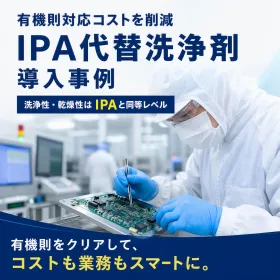
[Case Study] Reducing Organic Compliance Costs | IPA Alternative Cleaning Agents

Reduce response costs with organic solutions! Case study on the introduction of IPA alternative cleaning agent PAG-07.

In the manufacturing site of electronic components, fine contaminants such as machining oils, grease, and dust can affect product quality, making the cleaning process essential. On the other hand, IPA falls under the organic regulations, requiring ongoing measures for health checks, protective equipment, and local exhaust systems. This document presents a case study of switching from IPA to a cleaning agent that is not subject to organic regulations, resulting in reduced compliance costs and management man-hours.

  • Cleaning agents
  • Non-applicable cleaning agent

Added to bookmarks

Bookmarks list

Bookmark has been removed

Bookmarks list

You can't add any more bookmarks

By registering as a member, you can increase the number of bookmarks you can save and organize them with labels.

Free membership registration

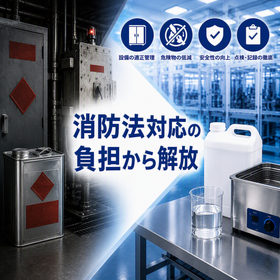
Firefighting Law Non-applicable (Non-hazardous) Cleaning Agent

The Fire Service Act relieves the burden of storing and using hazardous materials.

Cleaning agents such as thinner, acetone, and IPA (isopropyl alcohol) have high cleaning performance, but many fall under hazardous materials according to fire safety laws. Therefore, various management burdens arise, such as managing storage quantities, storing in hazardous material storage facilities, and addressing explosion-proof equipment. In recent years, more companies have been switching to cleaning agents that are not classified as hazardous materials under fire safety laws to improve safety and reduce the burden of compliance. Main benefits of cleaning agents not classified as hazardous materials: - Easier to operate without worrying about designated quantities or storage methods for hazardous materials - Reduced reliance on explosion-proof equipment and hazardous material storage facilities - Improved safety due to reduced fire risk - Expected improvement in odor and working environment - Some products can be used in combination with ultrasonic cleaning machines

  • Cleaning agents
  • Non-applicable cleaning agent

Added to bookmarks

Bookmarks list

Bookmark has been removed

Bookmarks list

You can't add any more bookmarks

By registering as a member, you can increase the number of bookmarks you can save and organize them with labels.

Free membership registration